 Skip to content
Address
304 North Cardinal
St. Dorchester Center, MA 02124
Work Hours
Monday to Friday: 7AM - 7PM
Weekend: 10AM - 5PM
Address
304 North Cardinal
St. Dorchester Center, MA 02124
Work Hours
Monday to Friday: 7AM - 7PM
Weekend: 10AM - 5PM

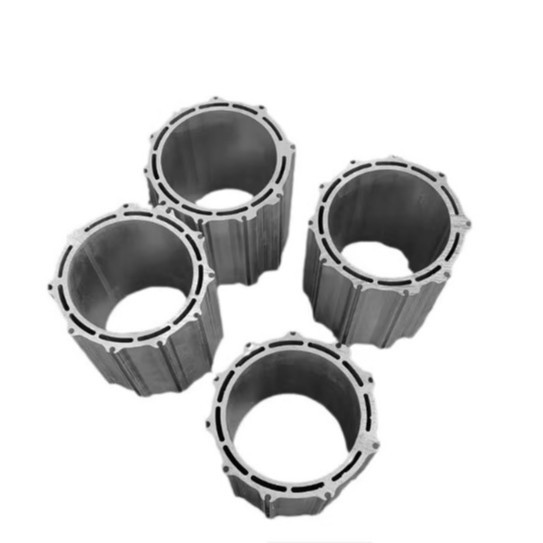
In the relentless pursuit of higher power density and greater efficiency, modern electric motors face a critical bottleneck: heat dissipation. As motors become more compact and powerful, traditional air-cooling methods often fall short, leading to thermal throttling, reduced efficiency, and premature failure. Enter water-cooled aluminum motor housings—a sophisticated solution that’s transforming industries from electric vehicles to industrial automation.
Aluminum isn’t chosen by accident for these critical components. The material offers a unique combination of properties that make it ideal for motor cooling applications:
According to research from the ASM International, aluminum’s thermal conductivity is approximately four times greater than cast iron and significantly better than most steels commonly used in motor construction.
Water and coolant mixtures possess a heat capacity approximately four times greater than air at the same volume flow rate. This fundamental physical property allows water-cooled systems to:
The electric vehicle revolution has been a primary driver of water-cooled motor technology. Tesla’s early adoption in their Model S and subsequent vehicles demonstrated the clear advantages:
In manufacturing environments, water-cooled servo motors enable:
*Case Study: A major industrial robot manufacturer reported a 40% increase in operational uptime after switching to water-cooled motor solutions for their welding robots.*
Wind turbine generators and hydropower systems benefit from:
The efficiency of a water-cooled housing depends heavily on the design of its internal cooling channels. Modern approaches include:
Proper manufacturing techniques significantly impact performance:
A housing is only one component of an effective cooling system. Successful implementation requires:
| Parameter | Air-Cooled | Oil-Cooled | Water-Cooled Aluminum |
|---|---|---|---|
| Heat Transfer Coefficient | Low (10-100 W/m²K) | Medium (50-500 W/m²K) | High (500-10,000 W/m²K) |
| System Complexity | Low | Medium | Medium-High |
| Temperature Stability | Poor | Good | Excellent |
| Maintenance Requirements | Low | Medium | Medium |
| Initial Cost | Low | Medium | High |
| Total Cost of Ownership | Medium-High | Medium | Low-Medium |
Data sourced from IEEE Transactions on Industry Applications
While aluminum offers natural corrosion resistance, water-cooling systems present specific challenges:
Solution: Use compatible coolant formulations with corrosion inhibitors and maintain proper fluid chemistry.
System integrity is non-negotiable. Modern solutions include:
Different rates of expansion between aluminum housings and steel motor components require:
3D printing technologies enable previously impossible cooling channel geometries:
Emerging technologies pushing the boundaries:
IoT integration enables:
The adoption of water-cooled aluminum motor housings represents more than an incremental improvement—it’s a paradigm shift in thermal management. As power densities continue to climb and efficiency requirements tighten across industries, the advantages of liquid cooling become increasingly compelling.
For engineers and designers, the decision isn’t whether to adopt liquid cooling, but when and how to implement it most effectively. The combination of aluminum’s material advantages with sophisticated cooling channel design creates a solution that balances performance, weight, and reliability in ways air cooling simply cannot match.
Ready to explore water-cooled solutions for your application? Contact our engineering team for a customized analysis of your thermal management needs.
