Address
304 North Cardinal
St. Dorchester Center, MA 02124
Work Hours
Monday to Friday: 7AM - 7PM
Weekend: 10AM - 5PM
Address
304 North Cardinal
St. Dorchester Center, MA 02124
Work Hours
Monday to Friday: 7AM - 7PM
Weekend: 10AM - 5PM
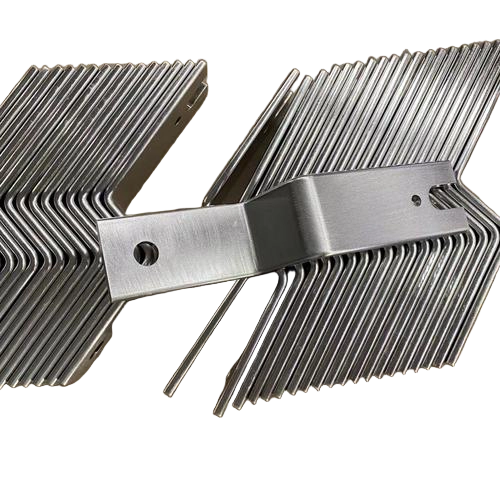
In the world of electrical power distribution, copper has long been the default choice for busbars. Its superior conductivity and proven reliability made it the gold standard for decades. But as copper prices continue to climb and supply chains face mounting pressure, a powerful alternative has emerged: aluminum busbars.
For engineers, procurement teams, and project managers looking to balance performance with budget, aluminum busbars offer a compelling proposition—technical interchangeability with copper, coupled with dramatic cost savings that can transform project economics.
The most immediate and striking advantage of aluminum busbars is their cost. The raw material price difference between copper and aluminum is not marginal—it is transformative.
Copper prices have averaged $8,000–$10,000 per tonne since 2021, while primary aluminum has traded at $2,200–$2,600 per tonne, establishing a sustained price ratio of approximately 3.5:1. On the London Metal Exchange, the price factor has averaged around 3.8 relative to aluminum in 2025. When you factor in the achievable weight reduction, the effective cost advantage of aluminum increases to a factor of approximately 7.0–7.9.
What does this mean in practice? A 2,000 A aluminum busbar system costs 40–55% less than an equivalent copper system, with weight savings of 50–60% that reduce structural steel, labor, and shipping costs. According to industry data, an aluminum busbar can cost as little as one-third of a comparable copper busbar.
A meticulous cost examination from Engineers Ireland revealed that aluminum exhibits a cost advantage of approximately one-third the expense associated with copper. For large-scale projects—data centers, EV charging infrastructure, renewable energy installations—these savings compound rapidly and can determine whether a project stays within budget.
The critical question for any engineer is simple: can aluminum actually perform as well as copper? The answer is yes—with proper design considerations.
Aluminum’s electrical conductivity is approximately 61% of copper’s (35 MS/m vs. 58 MS/m). This means aluminum conductors require a larger cross-sectional area to achieve the same current-carrying capacity—typically 1.5 to 1.7 times larger.
However, this is not a barrier to interchangeability. Industry standards provide clear ampacity equivalents. For example, a 400 A application can use a 40 × 5 mm copper bar or a 50 × 6 mm aluminum bar, achieving identical electrical performance. The key is to design for the larger profile, which is often entirely feasible in busbar trunking and switchgear applications.
Because copper’s density is more than three times that of aluminum (8.96 g/cm³ vs. 2.70 g/cm³), the larger aluminum cross-section still results in a weight reduction of approximately 48–54%. This weight advantage cascades through the entire system:
Modern aluminum busbar alloys—particularly 6xxx series such as EN AW-6101—are specifically engineered for electrical applications. Nickel-plated aluminum connections have demonstrated stable resistance through more than 6,000 thermal cycles across varied temperatures, remaining unaffected in corrosive conditions. Proper surface treatment and appropriate connection hardware ensure long-term reliability comparable to copper.
Aluminum busbars are already replacing copper across a wide range of high-current applications:
Data Centers: With their massive power distribution requirements and cost sensitivity, data centers are rapidly adopting aluminum busbars. The global data center busbar market is growing at a 16.6% CAGR, with aluminum as the fastest-growing segment.
EV Charging Infrastructure: Aluminum busbars reduce overall weight by approximately 30% while dramatically lowering material costs. A 200 mm² aluminum busbar can cost only one-third of a 95 mm² copper equivalent.
Renewable Energy: Solar and wind power inverters, battery energy storage systems, and modern substations all benefit from aluminum’s cost and weight advantages.
Industrial Switchgear: For ratings above 400 A, aluminum has become the default material, with copper reserved for compact, high-current-density applications.
The shift from copper to aluminum is not a fringe trend—it is a structural market transformation. Industry analysts project a 5.8% compound annual growth rate for the global aluminum conductor busbars market through 2035. In Europe, the aluminum share of the busbar market is forecast to rise from under 20% to near 30% by 2035 as advances in aluminum-copper joints and anti-corrosion coatings mitigate earlier performance concerns.
Copper supply deficits projected for 2028–2030 are expected to further accelerate substitution, as industry bodies anticipate raw material cost increases that make aluminum’s price advantage even more compelling.
Transitioning from copper to aluminum busbars requires attention to a few key design factors:
Aluminum busbars have moved beyond being a compromise. They are now a technically sound, commercially superior alternative to copper for the vast majority of high-current power distribution applications.
The numbers speak for themselves: 40–55% lower system cost, 50–60% weight reduction, and proven reliability through rigorous thermal cycling and corrosion testing. For projects where cost control and efficiency matter—which is virtually every project—aluminum busbars offer a compelling path forward.
As copper prices remain volatile and supply constraints loom, the question is no longer whether aluminum can replace copper. The question is: why haven’t you made the switch yet?