Address
304 North Cardinal
St. Dorchester Center, MA 02124
Work Hours
Monday to Friday: 7AM - 7PM
Weekend: 10AM - 5PM
Address
304 North Cardinal
St. Dorchester Center, MA 02124
Work Hours
Monday to Friday: 7AM - 7PM
Weekend: 10AM - 5PM

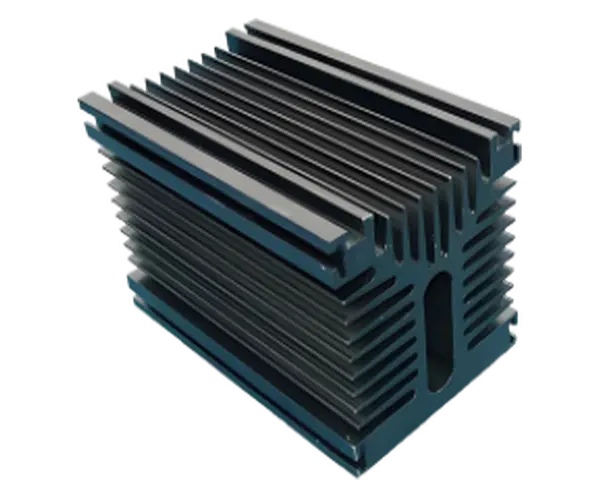
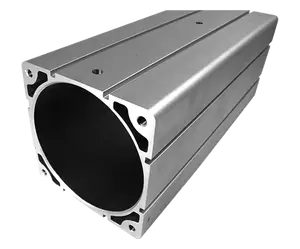
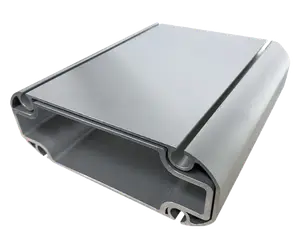
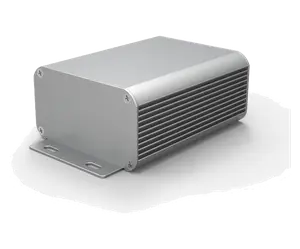
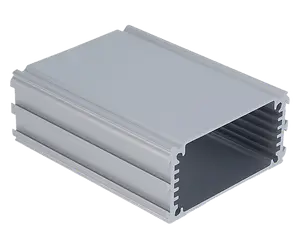
Heat Sink Aluminum Extrusion from HIQ Aluminum, engineered with profile design, extrusion, CNC machining, finishing and inspection for reliable industrial production.
Send the drawing, material, finish, critical tolerances and estimated quantities. We will confirm the engineering route before quotation.
Request a technical quoteHeat Sink Aluminum Extrusion is engineered by HIQ Aluminum for industrial controls, edge computing, AI hardware, power supplies, sensors and communication modules. Send a drawing, STEP model or performance target and our team will align the aluminum alloy, profile geometry, machining allowances and surface finish with the way the component will be produced and assembled.
This heat sink aluminum extrusion programme is built around one practical question: what does the finished component need to do in service? Rather than quoting a generic section, we review internal board clearance, wall thickness, heat-dissipation surfaces, connector access, sealing strategy and end-cap interfaces. That discussion helps identify the critical dimensions, avoid unnecessary secondary operations and set a manufacturing route that can be repeated across the project quantity.

| Component family | Electronic Aluminum Housing |
|---|---|
| Typical alloys | 6000-series aluminum alloys selected for strength, formability, finish and application conditions |
| Profile | Standard or project-specific section; drawing review determines the final geometry |
| Secondary operations | Cutting, CNC machining, drilling, tapping, bending or assembly preparation where required |
| Finish options | Mill finish, anodizing or powder coating, subject to part geometry and inspection requirements |
| Tolerance and order quantity | Confirmed from the drawing, critical features and production plan |
| Quality documentation | Inspection plan and material or dimensional records agreed during quotation |
The extrusion route is evaluated around thermal resistance, available installation space and the secondary machining needed for mounting and contact.
Thermal parts should be specified against the heat source and installation, not by outline dimensions alone. Airflow or coolant conditions, contact pressure and the mounting footprint all affect the useful performance of the component.
These points are not a substitute for the approved drawing, but they show the questions that should be resolved before tooling, quotation and inspection are finalized. Where the design is already in production, sharing the current specification, known quality issues and target improvements usually gives the fastest technical review.
Production planning connects profile development, extrusion, precision cutting, CNC machining, tapping, anodizing or powder coating and assembly support. The route is agreed only after the profile, material condition, critical features and finish have been reviewed together. That front-end work reduces the risk of a technically acceptable extrusion that later fails at machining, assembly or installation.
The most common applications include industrial control and edge-computing enclosures, power electronics and communication equipment, sensors, cameras and optical modules, ai accelerators and high-density electronic systems. We use the operating environment to narrow the material and finish options, and the assembly method to define which dimensions require inspection.
For buyers comparing suppliers, the useful comparison is not only price per kilogram. It is the cost of a component that arrives with the right section, the right machined interfaces, a repeatable finish and a route for handling engineering changes. Those factors shape the total cost of the heat sink aluminum extrusion programme.
Inspection starts with the features that control fit and function. For this product family, the plan can cover internal dimensions, flatness, hole position, thread condition, finish uniformity and fit between the extrusion and end plates. Exact checks and sampling are confirmed in the quotation package so that both teams work to the same acceptance criteria.
When the project warrants it, the team can review CMM inspection, surface-condition checks, thread inspection, fit trials and material documentation. Final requirements should be stated on the purchase drawing or in the approved inspection plan.
Yes. Custom work can include profile development, alloy selection, machining, finishing, assembly preparation and packaging. The drawing and target volume help us identify the most suitable route and tooling investment.
Provide a 2D drawing or 3D model, material and finish requirements, critical tolerances, annual and first-order quantities, inspection expectations and the destination. Photos of the current component are useful when the application is already in production.
Often, yes. We can review the section and the finished-part requirements to determine whether a stock or existing die is suitable. If not, we will explain where a new profile is likely to reduce total cost or improve function.
This Heat Sink Aluminum Extrusion should be selected by heat load, available airflow or coolant route, contact area and the space available around the heat source.
Fin height and spacing cannot be evaluated apart from the installed airflow direction. Base thickness and contact-surface flatness influence spreading into the component, while mounting pressure determines how reliably the thermal path is maintained in production.
For a liquid-cooled or high-density design, share the heat-source layout, port arrangement, pressure or leak-test requirements, surface limits and inspection method. The team can review extrusion, machining and finishing as one thermal manufacturing route.
Yes, where the drawing defines flatness, finish, datum and inspection requirements for the thermal interface.
The thermal route depends on available airflow, fin orientation and enclosure clearance. Share the installed layout for review.
Continue to send the drawing to the HIQ engineering team or review the wider aluminum profile product range.
A heat sink aluminum extrusion combines a structural enclosure with a thermal path, so the profile must serve both functions. First, map the heat sources, contact patches and airflow direction because a uniform fin design is not always the most efficient answer.
Next, balance fin spacing with dust tolerance and extrusion feasibility. Also review wall sections around connectors, mounting bosses and sealing grooves so that machining does not create thin or unstable areas.
Finally, define interface flatness, threaded inserts and finish. Consequently, the finished extrusion can be assembled, tested and inspected against the same critical dimensions used in production.
For related specifications, review Explore electronic aluminum housings. For broader industry context, consult The Aluminum Association extrusion overview.
Review the wider electronic aluminum housing range, browse the aluminum profile product hub, or send your drawing to the HIQ engineering team. For material terminology and standards, the Aluminum Association and ASTM International publish useful reference material.