Address
304 North Cardinal
St. Dorchester Center, MA 02124
Work Hours
Monday to Friday: 7AM - 7PM
Weekend: 10AM - 5PM
Address
304 North Cardinal
St. Dorchester Center, MA 02124
Work Hours
Monday to Friday: 7AM - 7PM
Weekend: 10AM - 5PM

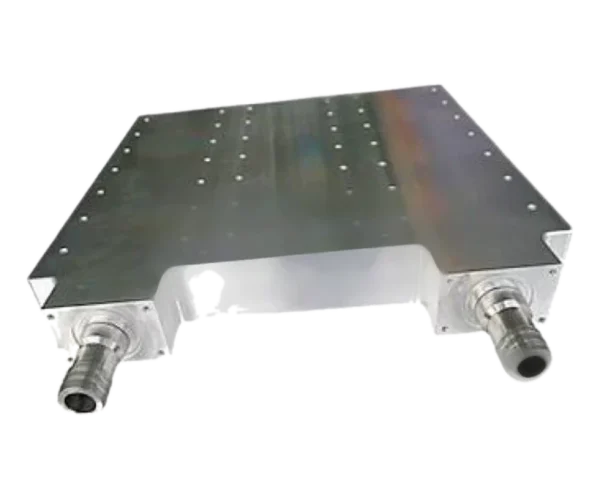
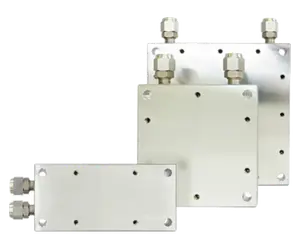
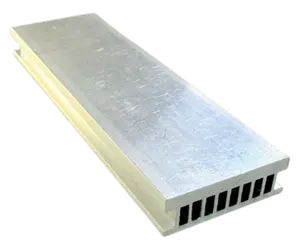
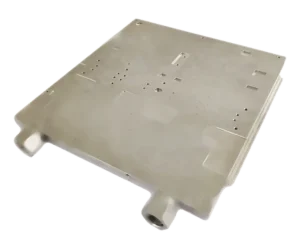
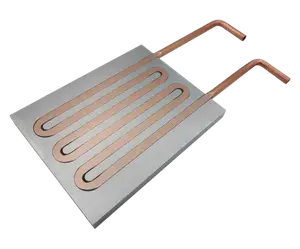
A custom aluminum cooling plate for inverter and drive assemblies, developed from the power-module footprint, coolant conditions and installation constraints.
Send the drawing, material, finish, critical tolerances and estimated quantities. We will confirm the engineering route before quotation.
Request a technical quoteCustom cooling plate for industrial inverters is specified around the complete thermal and mechanical job. A custom cooling plate for industrial inverters is usually part of a larger drive enclosure, where access, service and manufacturing volume matter as much as thermal resistance. The right design balances thermal spreading, coolant routing and practical machining.
Industrial drives may use one large IGBT module or several smaller devices distributed across a base plate. Uneven heat loading can create hot regions, while fittings and mounting hardware can reduce usable fin or channel area. A useful review therefore begins with the loss distribution and physical assembly, not only with the plate outline.
| Part number | HIQ-CP-INV-425 |
|---|---|
| Reference envelope | 425 x 357 x 39 mm |
| Reference sample mass | 4.7 kg |
| Reference temperature range | -40 C to 150 C |
| Cooling method | Closed-loop liquid cooling |
| Orientation | Vertical reference layout |
| Body material route | Aluminum, grade and temper confirmed for the project |
| Secondary operations | CNC machining, drilling, port preparation and finish |
| Customization | Outline, channels, ports, mounting holes and finish |
| Acceptance | Drawing-based dimensional, surface and leak-test plan |
The dimensions, mass and temperature range shown here come from the supplied reference sample and are useful for an initial layout review. HIQ confirms the final drawing, aluminum alloy, joining route, port specification and test requirements before production.
A successful cooling plate must do more than provide a large metal area. The following points should be resolved before tooling and sample approval:
These questions help distinguish a visually similar plate from one that can be assembled and validated predictably. Where the application already has a working design, send the drawing, test history and known failure points so the review can focus on the interfaces that need improvement.
The production route combines thermal-path review, aluminum profile or plate selection, CNC machining, coolant-circuit preparation, surface finishing and inspection. The sequence is planned around the finished interface rather than around one manufacturing process.
The same cooling-plate architecture can support variable-frequency drives, servo amplifiers, regenerative power stages, elevator controls and process-automation cabinets. Some projects need a compact plate integrated into an enclosure; others need serviceable ports, replaceable fittings or a layout that can accommodate more than one power rating.
The reference enclosure is intentionally adaptable. A buyer can use it as a starting point for a new housing, a replacement plate or a family of related products. Final performance must still be established with the actual module, coolant loop and mounting condition; published outline dimensions alone cannot guarantee a system temperature.
Repeatability is central for industrial products. The approved process should define datum surfaces, tightening sequence, port torque, surface protection and the checks performed after machining. For higher quantities, fixtures and inspection gauges can make thermal-interface and mounting dimensions easier to control without adding unnecessary operations to every part.
For material and process context, review the Aluminum Association and ASTM International. Use the approved project drawing and test plan for final acceptance.
Review the liquid-cooled heat sink range, compare the IGBT water-cooled heat sink plates, or send the module drawing to HIQ Aluminum for a technical review.
Send the module drawing, mounting-hole pattern, heat load, flow target and available envelope. These details are enough to begin a manufacturability review.
The project can consider integrated mounting, enclosure interfaces and manifold connections where the design and production quantity support the added complexity.
State flatness, roughness, datum references, contact area and inspection method on the drawing rather than relying on a general finish description.