Address
304 North Cardinal
St. Dorchester Center, MA 02124
Work Hours
Monday to Friday: 7AM - 7PM
Weekend: 10AM - 5PM
Address
304 North Cardinal
St. Dorchester Center, MA 02124
Work Hours
Monday to Friday: 7AM - 7PM
Weekend: 10AM - 5PM

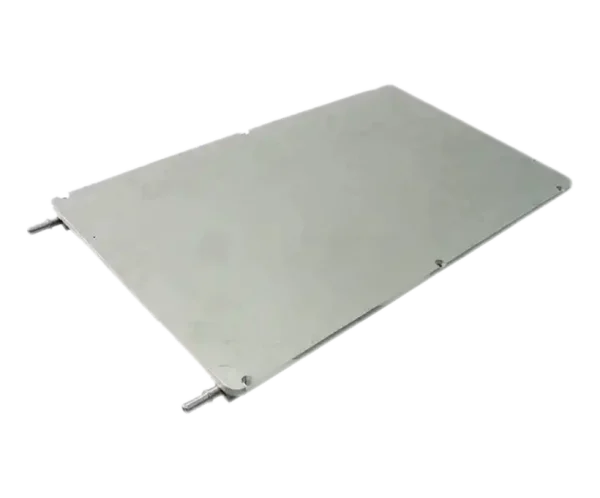
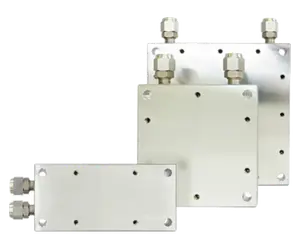
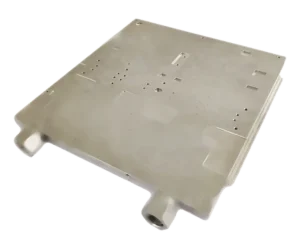
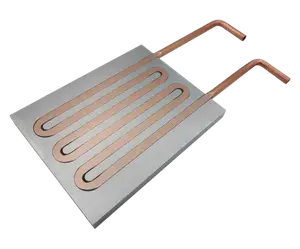
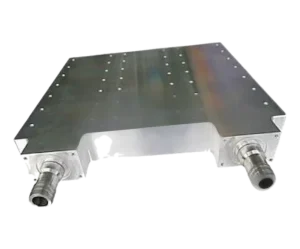
A lightweight aluminum cooling plate for electric-vehicle power electronics, specified around heat load, coolant flow, mounting space and sealed-circuit quality.
Send the drawing, material, finish, critical tolerances and estimated quantities. We will confirm the engineering route before quotation.
Request a technical quoteAluminum cooling plate for electric vehicles is specified around the complete thermal and mechanical job. An aluminum cooling plate for electric vehicles has to package thermal performance into a compact assembly that can survive vibration, coolant exposure and repeat production. Weight matters, but so do flatness at the power-module interface, fitting access and the ability to inspect every fluid joint.
EV thermal designs often share one coolant loop across power modules, converters and other electronics. The plate must be reviewed as part of that loop: inlet temperature, flow rate, pressure drop and contamination control can influence channel geometry and the choice of port or connector. The mounting structure also needs to preserve contact pressure without distorting the thermal surface.
| Part number | HIQ-CP-EV-425 |
|---|---|
| Reference envelope | 425 x 357 x 39 mm |
| Reference sample mass | 4.7 kg |
| Reference temperature range | -40 C to 150 C |
| Cooling method | Closed-loop liquid cooling |
| Orientation | Vertical reference layout |
| Body material route | Aluminum, grade and temper confirmed for the project |
| Secondary operations | CNC machining, drilling, port preparation and finish |
| Customization | Outline, channels, ports, mounting holes and finish |
| Acceptance | Drawing-based dimensional, surface and leak-test plan |
The dimensions, mass and temperature range shown here come from the supplied reference sample and are useful for an initial layout review. HIQ confirms the final drawing, aluminum alloy, joining route, port specification and test requirements before production.
A successful cooling plate must do more than provide a large metal area. The following points should be resolved before tooling and sample approval:
These questions help distinguish a visually similar plate from one that can be assembled and validated predictably. Where the application already has a working design, send the drawing, test history and known failure points so the review can focus on the interfaces that need improvement.
The production route combines thermal-path review, aluminum profile or plate selection, CNC machining, coolant-circuit preparation, surface finishing and inspection. The sequence is planned around the finished interface rather than around one manufacturing process.
The reference plate can guide work for traction inverters, onboard chargers, DC-DC converters, battery-management power stages and charging equipment. Each application needs its own load map and environmental requirements; a passenger-car converter does not use the same validation basis as a commercial-vehicle power stack.
The reference enclosure is intentionally adaptable. A buyer can use it as a starting point for a new housing, a replacement plate or a family of related products. Final performance must still be established with the actual module, coolant loop and mounting condition; published outline dimensions alone cannot guarantee a system temperature.
Vehicle programs usually require more than a first-article dimensional report. The quotation should identify leak-test conditions, fitting retention, surface protection, cleanliness and traceability requirements. If the plate is bonded or welded, interface inspection and process controls should also be agreed before samples are released.
For material and process context, review the Aluminum Association and ASTM International. Use the approved project drawing and test plan for final acceptance.
Review the liquid-cooled heat sink range, compare the IGBT water-cooled heat sink plates, or send the module drawing to HIQ Aluminum for a technical review.
The coolant specification is project-specific. Share the chemistry, concentration, operating temperature and pressure so compatible materials and joining methods can be reviewed.
Port position, fitting type and inlet-outlet direction can be adapted within the available machining and flow-path design.
Yes. Test method, pressure, duration and allowable leak rate can be included in the inspection and acceptance plan.